
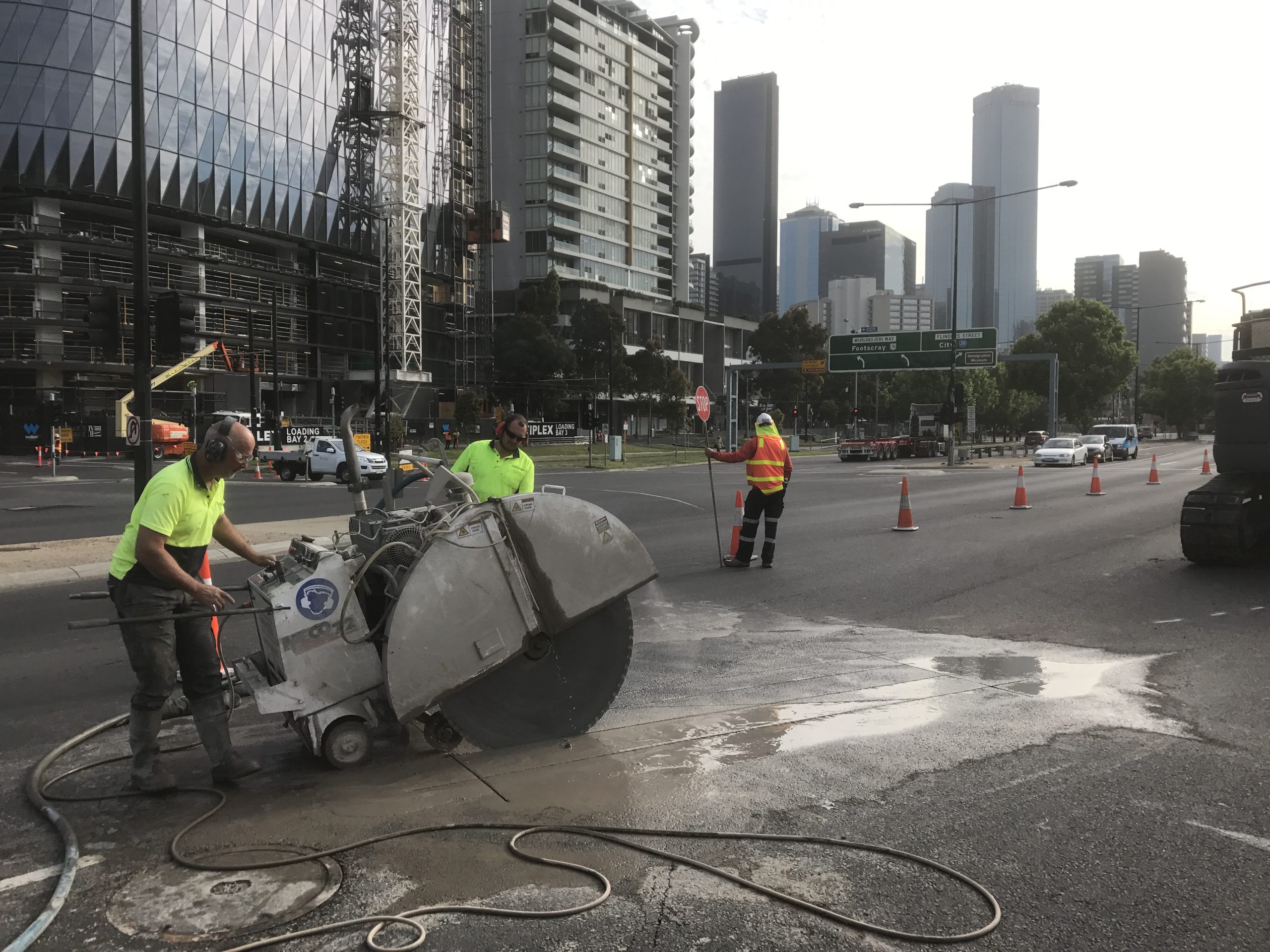
Power Concrete Cutting provides dust-controlled concrete cutting in Melbourne for occupied commercial buildings using wet cutting and slurry management.
Concrete cutting inside an occupied office, retail tenancy or commercial facility needs more planning than work on an open site. Dust-controlled concrete cutting can reduce airborne silica generation and manage slurry, but the cutting method, work area and access conditions still need to be assessed first.
How Dust-Controlled Concrete Cutting Works in Occupied Buildings
Concrete contains crystalline silica, so cutting or drilling can generate respirable silica dust if the work is not properly controlled. In occupied buildings, the work also needs to account for nearby staff, customers, equipment, finishes and shared access routes.
At Power Concrete Cutting, our concrete cutting and drilling services include trench cutting, core drilling, wall and floor penetrations, concrete bursting and slurry removal. We also use low-emission and electric cutting equipment for internal work where suitable.
Controls may include:
- Wet cutting: Water supplied at the blade or drilling point helps suppress dust before it becomes airborne.
- Slurry capture: Wet-vacuum equipment can collect the water and concrete residue produced during cutting or drilling.
- Work-area separation: Access around the cutting zone should be controlled so occupants and other trades do not enter the immediate work area.
- Method selection: Core drilling, wall sawing, floor cutting or another technique should suit the required opening, substrate and access conditions.
- Site coordination: Building managers should confirm access, services, operating constraints and sensitive areas before work starts.
Why Slurry Control Matters as Much as Dust
Wet cutting reduces airborne dust, but it creates concrete slurry that also needs to be controlled. Allowing slurry to spread across floors, reach drains or dry into residue can create additional site problems.
Our concrete slurry removal service uses wet-vacuum extraction to collect slurry generated during cutting work. This is particularly relevant to internal commercial jobs where surrounding finishes or pedestrian routes need to remain separated from the work zone.
For service openings, our concrete core drilling service also uses wet-drilling methods and slurry collection for controlled penetrations through concrete and masonry.
Plan Occupied-Site Cutting Around Silica Risk
The Safe Work Australia silica guidance identifies concrete cutting as an activity that can generate respirable crystalline silica. It recommends using the hierarchy of controls and lists wet cutting, on-tool dust extraction and local exhaust ventilation among measures that may minimise exposure.
Air monitoring is not automatically required on every job, but it must be considered where there is uncertainty about whether the workplace exposure standard may be exceeded or where monitoring is needed to assess health risk. These obligations should be addressed within the project’s site-specific risk controls.
Our existing article on industrial silica dust control during concrete sawing explains the broader role of water suppression, extraction, slurry management and respiratory protection.
Keep Commercial Cutting Practical and Controlled
Dust-controlled concrete cutting still requires careful management of noise, slurry, access, falling debris, electrical services and structural risks. Providing approved dimensions, substrate details, service information and occupancy constraints help us select the right equipment and cutting method for the documented scope. Power Concrete Cutting has served Melbourne since 2000, providing concrete cutting and drilling across metropolitan Melbourne and surrounding areas.
If you need cutting or drilling inside an occupied commercial property, contact us with the drawings, required openings and site constraints to discuss a suitable method and request a quote.