
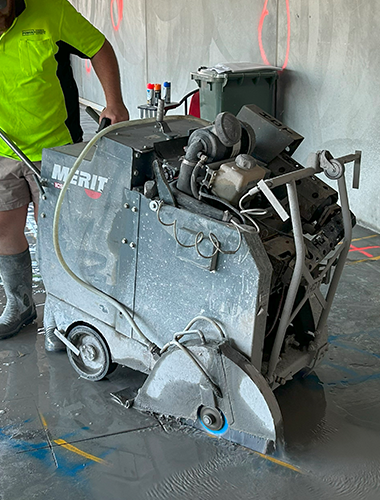
Power Concrete Cutting performs wire loop installation in Melbourne for automated gates and rapid roller doors. Request a precise cutting quote today.
Wire loop installation creates precisely cut channels for inductive vehicle-detection loops beneath automated access points. At Power Concrete Cutting, we prepare these loop paths across Melbourne for gates, boom gates and rapid roller doors, giving access-control contractors a clean base for their system components.
What Does Wire Loop Installation Include for Automated Gates?
For our scope, wire loop installation means setting out and cutting shallow, uniform channels in concrete or asphalt, then preparing the route for the loop wire and sealant. Our wire and caulk loop cutting service is suited to automated commercial doors, security gates, boom gates and traffic-management access points. The electrical contractor or access-control specialist can then connect and commission the detection system.
Accurate geometry matters because the detector relies on the installed loop to identify a vehicle approaching or occupying the access point. Channel depth, width, corners and placement must match the project specification. Guesswork at this stage can leave the wire exposed, pinched or poorly sealed, creating avoidable rectification around an operational entrance.
Where Does Wire Loop Installation Add Commercial Value?
The strongest use case is a site where unreliable detection disrupts traffic flow, security or loading operations. Wire loop installation can support:
- Warehouse entrances: vehicle detection for rapid roller doors used by forklifts and delivery vehicles.
- Commercial car parks: loop channels for automated gates, boom gates and controlled entry lanes.
- Industrial facilities: planned detection points aligned with vehicle routes and operating zones.
- Body corporate properties: defined loop locations for resident and authorised vehicle access.
For factory modifications, sequencing the loop cuts with broader industrial concrete cutting for factory upgrades can reduce clashes with slab works, traffic controls and other trades. Early coordination also confirms whether the loop crosses joints, drainage paths, reinforcement zones or services that may affect the cutting plan.
How Should Wire Loop Cutting Be Planned Before Site Work?
Before cutting begins, we need the approved loop layout, required channel dimensions, substrate details and access restrictions. We also need to understand when the door, gate or barrier contractor will install and test the system. That information lets us plan the cutting sequence without claiming responsibility for controls outside our concrete-cutting scope.
Concrete cutting also requires task-specific risk controls. The WorkSafe Victoria safe concrete cutting and drilling industry standard outlines hazards including dust, electricity, vibration and damage to structures or services. Site conditions determine the appropriate controls; a generic promise of ‘dust-free’ or ‘risk-free’ work would be inaccurate.
What Information Produces a Faster Wire Loop Installation Quote?
A useful enquiry includes the site suburb, surface type, number and approximate dimensions of loops, access-system type, drawings or marked-up photos, operating-hour restrictions and preferred timing. If the entrance must remain active, tell us how traffic can be staged while the cuts are completed.
Planning wire loop installation for an automated gate or rapid roller door? Send the scope, loop layout and site photos through our Melbourne project enquiry form. We will review the cutting requirements and respond with the next practical step for an accurate quote.